Beyond AI fluency: what we heard at the Singapore Education Lounge
Takeaways from the panel we hosted with Singapore Education Network on 23 September 2026


As AI takes on more of the work of producing answers, educators face a practical question: what should learners be able to do that a tool cannot do for them?
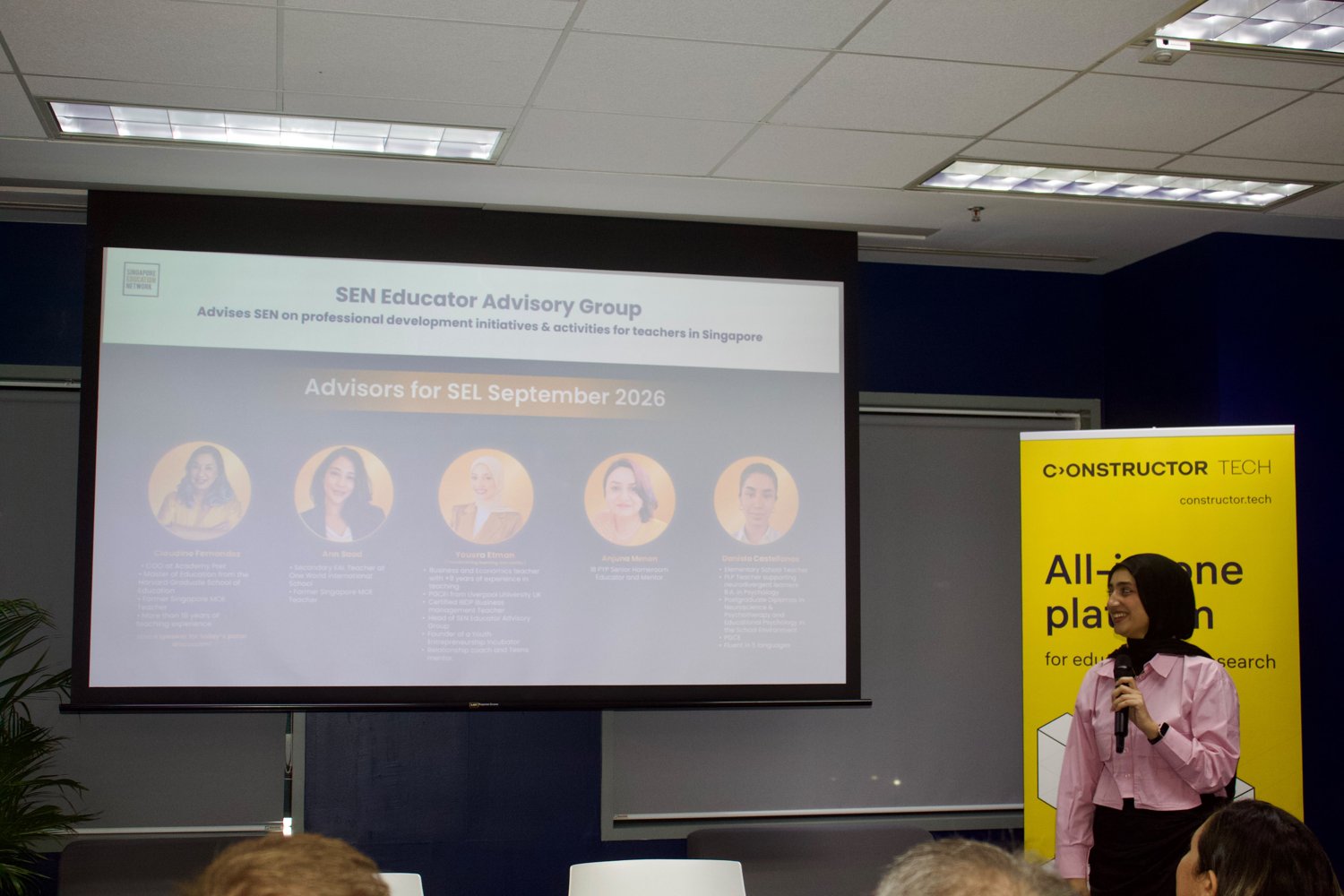
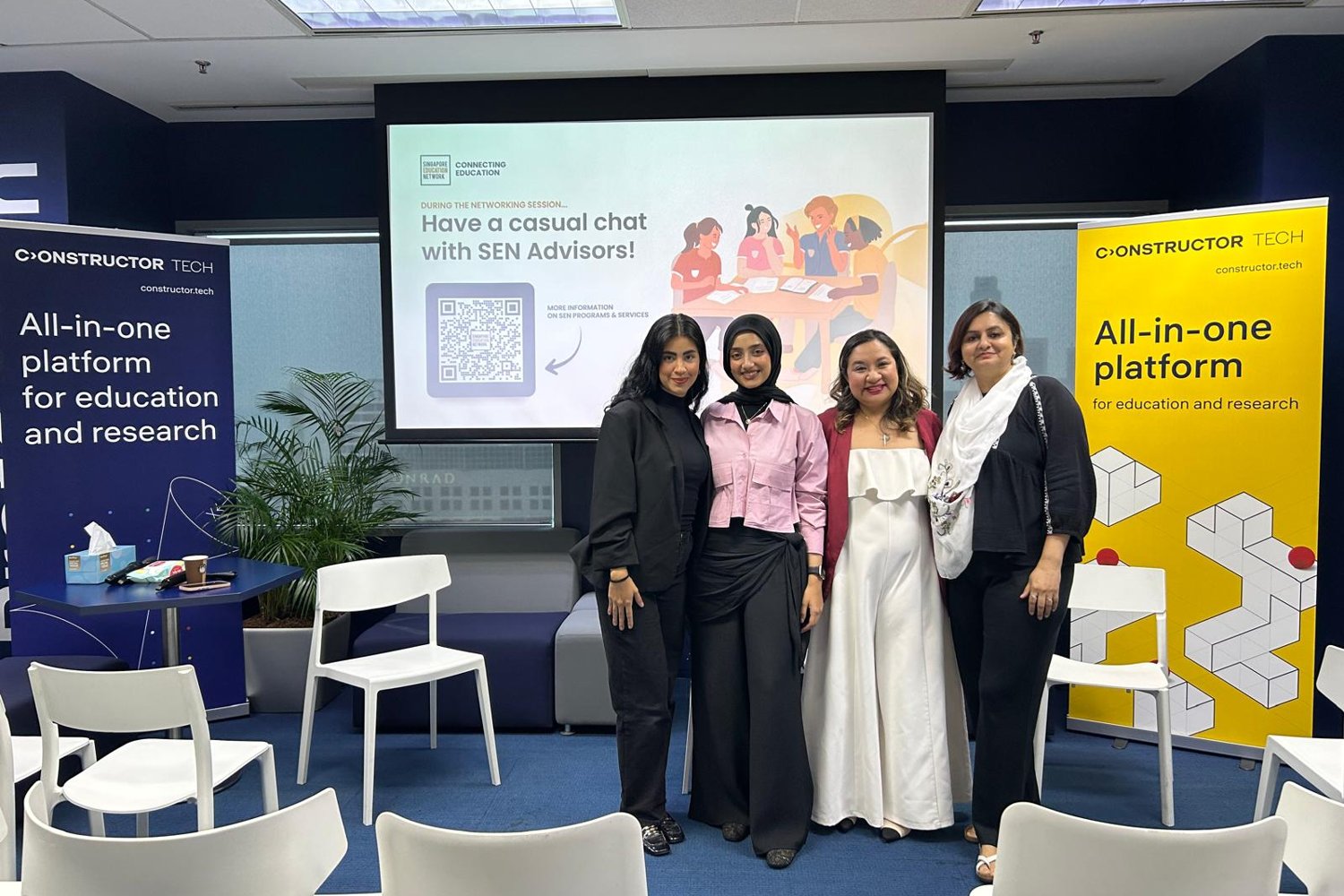
That question shaped the September 2026 Singapore Education Lounge, the monthly gathering for education professionals organized by Singapore Education Network (SEN). We hosted this edition at our Singapore office on 23 September 2026, and around 30 people from international schools, universities, training providers, and edtech companies joined us. SEN opened the evening with a welcome address and also presented its teacher programs and advisors. Royston Tan, our Senior Growth Manager, Asia, introduced Constructor Tech before the panel began.
AI can draft an answer, but people still weigh the evidence, read the context, and own the decision.
Domain expertise plus the ability to evaluate and apply the tools that come next, not only today's AI.
Look past completion to the decisions, evidence, and revisions learners show in real tasks.
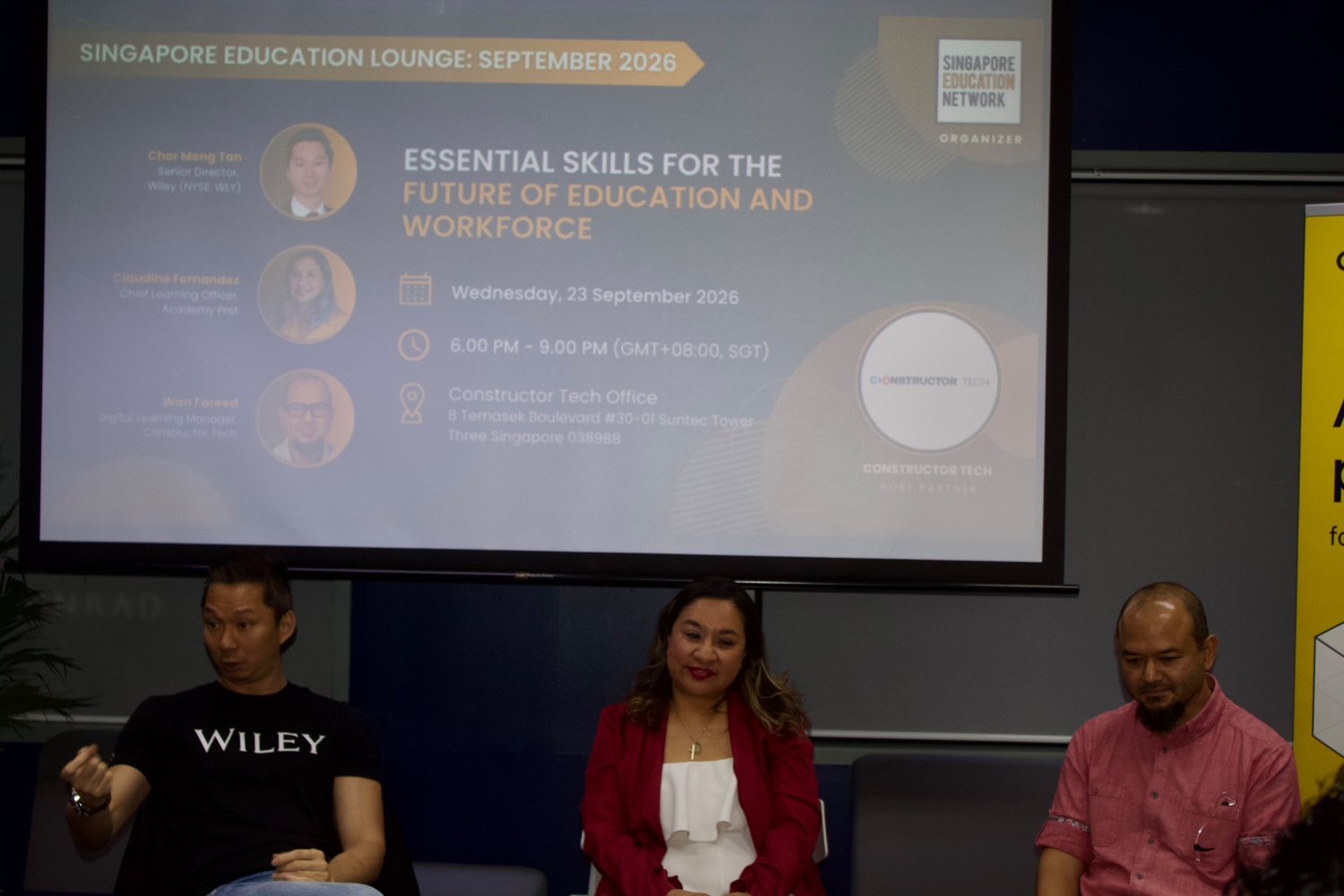
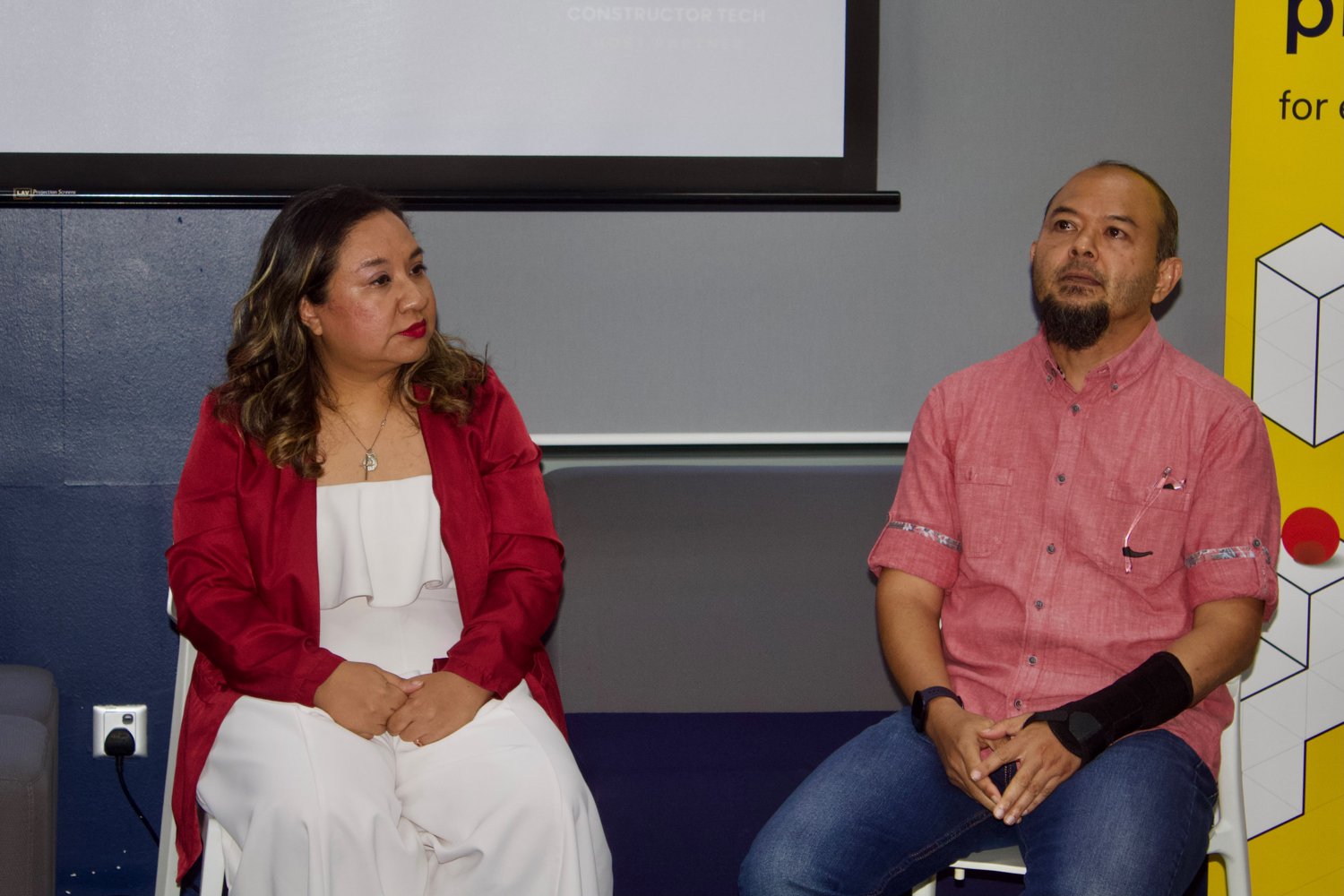
Chor Meng Tan of Wiley, Claudine Fernandez of Academy Prêt, and Wan Fareed of Constructor Tech discussed which skills matter most as AI changes education and work. Alex Boome of the Hinrich Foundation moderated.
The takeaways below draw on the discussion and on the reflections Chor Meng, Wan, and Royston shared with us after the event.
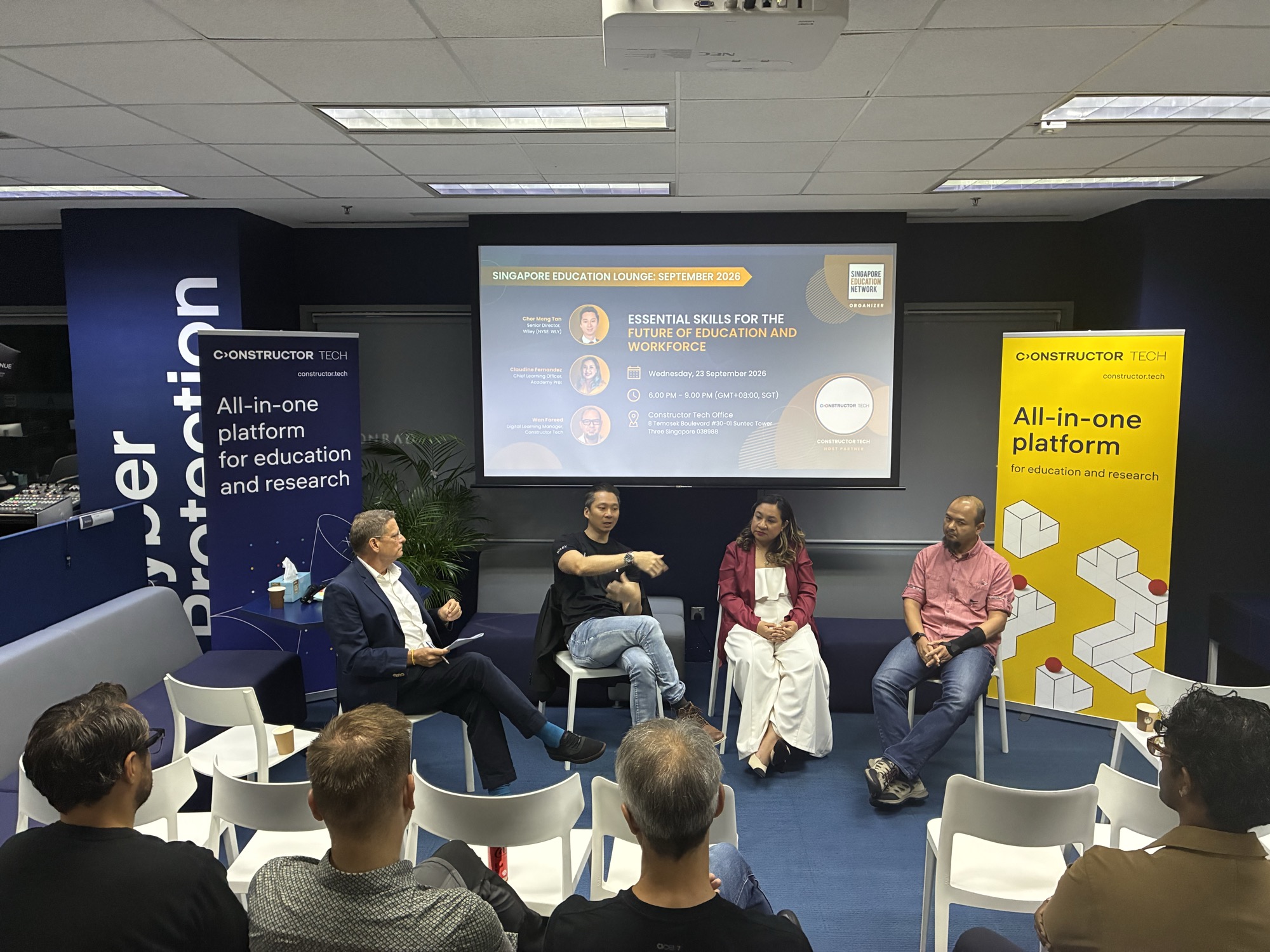
| Time | Session |
|---|---|
| 18:00–18:30 | Registration and networking |
| 18:30–18:35 | Welcome address by Singapore Education Network |
| 18:35–18:40 | Introduction to Constructor Tech by Royston Tan |
| 18:40–19:25 | Panel Essential skills for the future of education and workforce |
| Moderator | Alex Boome Trade Education Program Director, Hinrich Foundation |
| Speakers | Chor Meng Tan, Senior Director, Wiley Claudine Fernandez, Chief Learning Officer, Academy Prêt Wan Fareed, Digital Learning Manager, Constructor Tech |
| 19:25–19:40 | Q&A |
| 19:40–21:00 | Refreshments and networking |
For Chor Meng, human judgment matters most. AI can generate answers, but people still need to evaluate the evidence, understand the context, and remain accountable.
He also sees institutions moving from content delivery toward authentic tasks and demonstrated capability. Technology helps by expanding practice and feedback, but it becomes a barrier when it replaces thinking.
Chor Meng Tan, Senior Director, Wiley
Singapore's Ministry of Digital Development and Information (MDDI) has described AI bilinguals as people fluent in both their professional domain and AI. In his written reflections, Wan supported that direction but argued for looking further ahead, toward technology bilinguals.
Today's tools will keep evolving. Strong domain expertise therefore needs to sit alongside the ability to understand, evaluate, and purposefully apply emerging technologies.
Wan tied this back to fundamentals that don't change. Educators and learning and development (L&D) professionals still need to understand learning needs, context, and nuance. Learners still need critical thinking, judgment, communication, and collaboration. That is why he sees task design as central. Technology may enable new ways to learn. But it is an educator's understanding of the domain, the learners, and the context that shapes the authentic tasks where learners practice these capabilities.
What stood out to Wan from the audience questions and the conversations afterward was how progress gets measured. He sees behavioral AI as an opportunity to move beyond tracking completion to examining what learners actually demonstrate. AI can help capture observable evidence within authentic tasks, such as decisions, responses, use of evidence, and revisions.
Wan Fareed, Digital Learning Manager, Constructor Tech
Demonstrating capability matters beyond the classroom too. One issue raised during the evening was the gap between what students learn at university and how prepared they are for the workplace.
Royston's take: many programs already include internships, which are meant to prepare students for work. In his view, they may not be working as well as they should because they are not always properly implemented. For example, students may be asked to do menial tasks instead of work that genuinely prepares them for the workforce.
Wan's practical advice was to begin with what already exists. Educators can take up professional development opportunities and use frameworks such as Technological Pedagogical Content Knowledge (TPACK) to connect technology with content and pedagogy.
For L&D leaders, initiatives such as the National Centre of Excellence for Workplace Learning (NACE) and innovPlus can help build capability and test new learning approaches.
23 September 2026, Constructor Tech office, Singapore
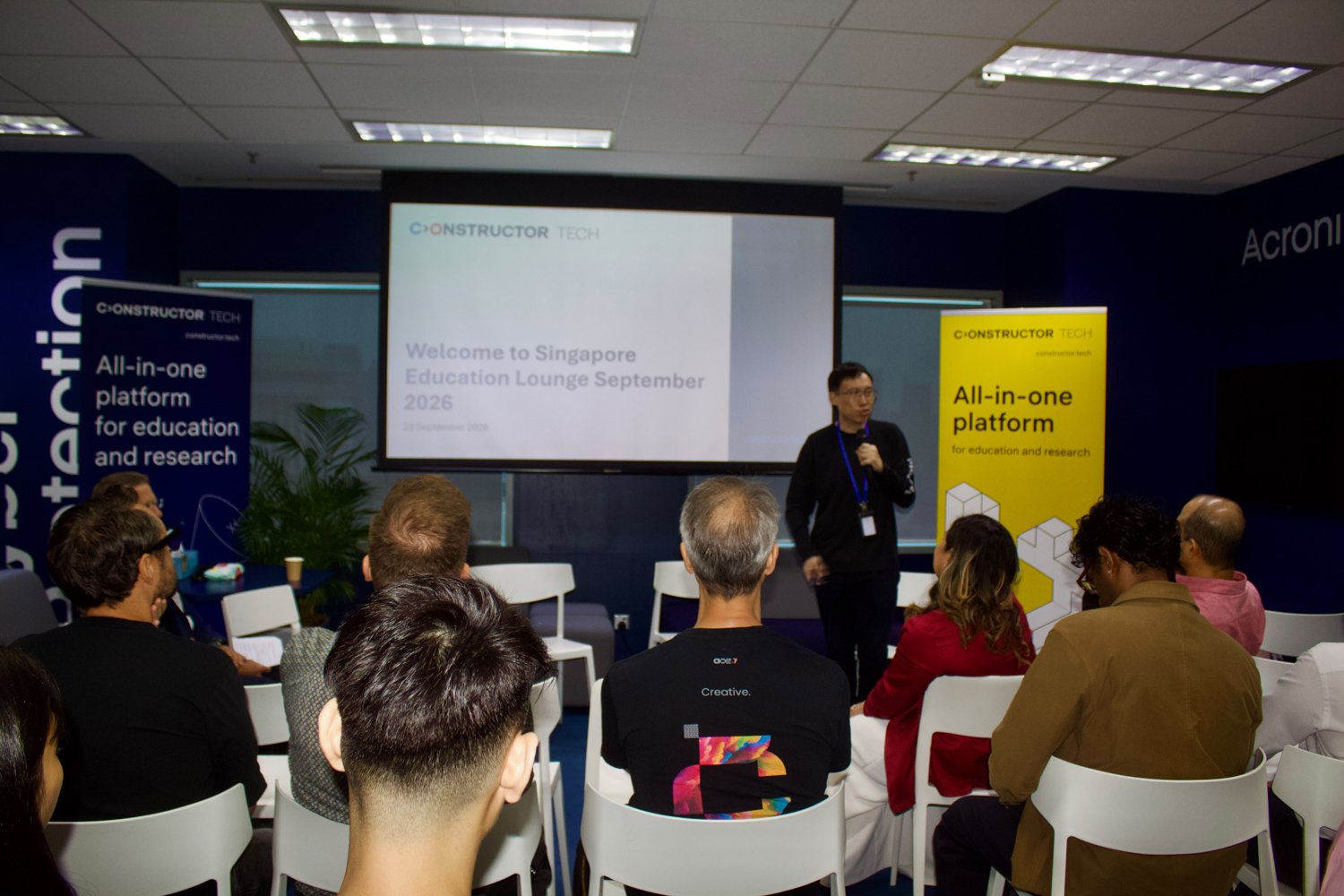
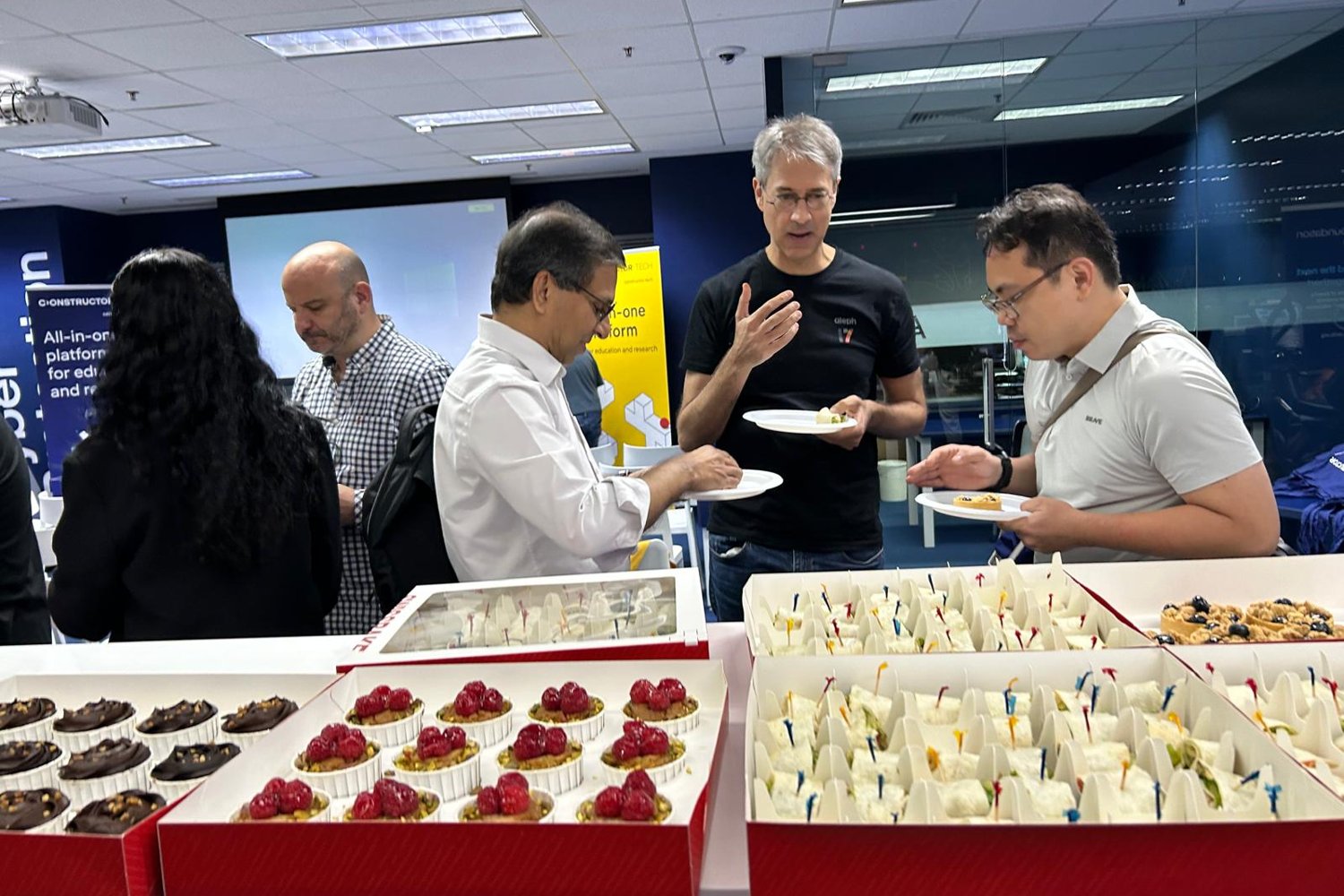




The Singapore Education Lounge is a monthly in-person gathering for education professionals, organized by Singapore Education Network (SEN). Constructor Tech hosted the September 2026 edition at its Singapore office.
It took place on 23 September 2026, from 18:00 to 21:00, at the Constructor Tech office in Suntec Tower 3, 8 Temasek Boulevard, Singapore.
Chor Meng Tan, Senior Director at Wiley; Claudine Fernandez, Chief Learning Officer at Academy Prêt; and Wan Fareed, Digital Learning Manager at Constructor Tech. Alex Boome, Trade Education Program Director at the Hinrich Foundation, moderated.
A technology bilingual combines strong expertise in their own field with the ability to understand, evaluate, and purposefully apply emerging technologies. Wan Fareed proposed the idea as a step beyond the AI bilinguals described by Singapore's Ministry of Digital Development and Information (MDDI).
AI can generate an answer, but people still need to evaluate the evidence, understand the context, and take responsibility for the decision. As Chor Meng Tan put it, AI cannot carry accountability for that answer.
The Lounge is open to all education professionals. Singapore Education Network organizes it each month.
Thank you to SEN, the Hinrich Foundation, our panelists, and everyone who joined us for an evening of discussion that carried on well into the networking. We look forward to continuing these conversations in Singapore.
Good assessment starts with what learners can do, not only whether they finished a task.