Why are insights key to education’s future? Highlights from THE Digital Universities Asia
06 August, 2025


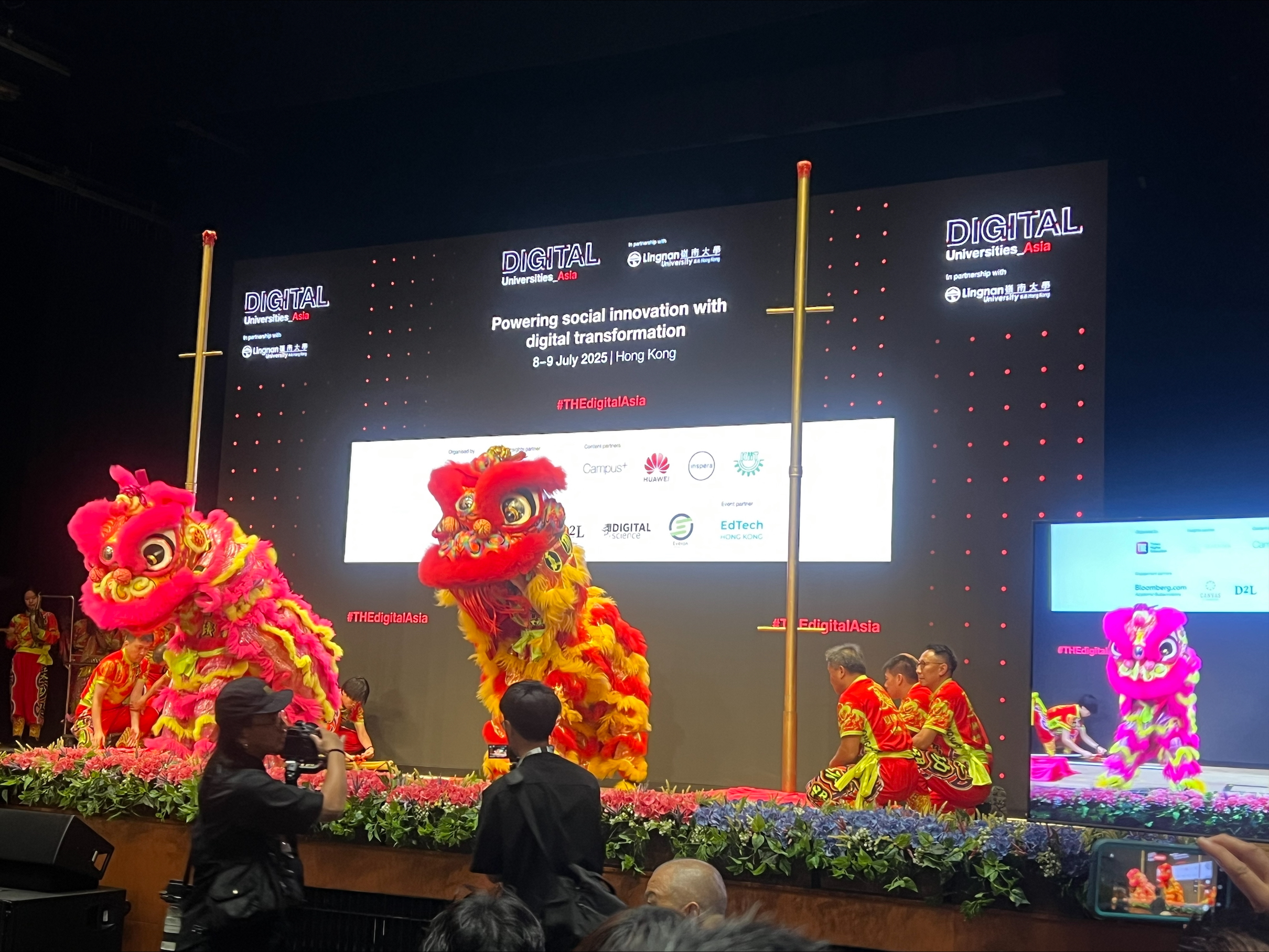
Digital transformation is no longer optional for universities—but without insight, it risks becoming aimless. At Times Higher Education Digital Universities Asia 2025 hosted by Lingnan University, the headlines followed a familiar arc: more data, smarter systems, faster innovation. Yet the message from vice-chancellors, faculty, students, and policymakers was clear: without purposeful insights, transformation stalls.
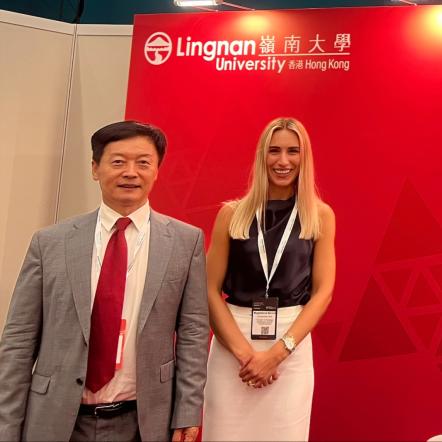
Magdalena Marzec, Director of Strategic Intelligence & Transformation at Constructor Tech, attended the summit and identified several valuable insights—some of which we’re pleased to share in this article.
Data is everywhere. But information without intention is just noise. Rhodora Abadia, associate dean of online at the University of South Australia emphasized that meaningful data use begins with identifying key decision points – what decisions need to be made, when and what data will help make them. Otherwise, collecting data alone has little strategic value..
Her Learning Insights project puts this into practice - mapping academic data not to dashboards, but to decision points: key moments in the semester where targeted support can re-engage students, tailor learning paths, or prevent drop-off. Professor Lily Chan, vice chancellor of Wawasan Open University in Penang, provided a powerful example. Over 70% of WOU’s adult learners complete assignments entirely on mobile phones. She emphasized that real transformation must be grounded in understanding the lived realities of learners. The takeaway is clear: strategy must follow student behavior insights, not tech trends. This insight-led approach was a defining feature of Lingnan University’s strategy as host of the summit..
At Lingnan University, digital transformation is led by insight, not hype. Since 2024, all first-year students take a compulsory course in generative AI. Faculty use an in-house AI tool to prepare lectures in minutes - saving time that can be redirected to mentoring and feedback.
But these tools are not deployed blindly. Their implementation is guided by a clear understanding of how AI can improve learning outcomes, not just efficiency.
The university’s new School of Data Science reinforces this approach, offering interdisciplinary training grounded in ethics, social responsibility, and strategic thinking.
One of the most forward-thinking threads of the summit was the call for students to be more than participants in digital transformation - they must be co-designers.
This shift requires more than surveys. It begins with transparency - sharing how student data is collected and used. At several institutions, learning analytics and AI systems are being used not only to support academic decisions, but also to help students reflect on their own behaviors and progress. Discussions at the summit raised a critical question: are these patterns encouraging curiosity, or simply compliance?
When insight is shared - not hidden - it becomes a tool for self-awareness.
The summit also spotlighted critical questions:
Institutions can’t outsource their ethics. It’s not enough to ask what AI can do. The real question is: does it align with what we believe education is for? Whether it’s mobile-first design in Malaysia or AI-powered textbooks in Korea, the issue is never just adoption - it’s alignment. If insights are going to guide strategy, they must be: ethical: grounded in institutional mission interpretable: visible and understandable to both staff and students actionable: tied directly to decisions that impact learning. This is why insight isn’t just a data challenge - it’s a human one.
A Deputy Director from the International Centre for Higher Education Innovation (UNESCO) explained, even the best tools will fail if educators aren’t equipped to use them - and that capacity-building is essential to making digital transformation sustainable.
Everyone’s chasing “smart campuses.” But as Professor James Harland of RMIT asked bluntly, “What is a smart campus actually for?”
Too often, technology is adopted before the educational problem is even named. Professor Harland’s warning was simple: if innovation isn’t solving something meaningful, it’s just infrastructure.
Ultimately, insight is not a technical challenge - it’s a leadership one. If you’re drafting an AI policy, start with your values. If your mission isn’t in the room, your policy won’t matter. Insightful universities won’t just track more data - they’ll ask better questions.
The most digital university won’t lead the future. The most insightful one will. Insight is not the output of innovation - it’s the compass that guides it. It must shape strategy, leadership, curriculum, and impact.
To lead in this era, institutions must slow down enough to reflect. They must create space for ethical design, honest failure, and human judgment. Because real transformation isn’t about being first. It’s about being thoughtful. And that’s what cuts through the noise.
Constructor Tech's solutions will help you with that.

Director of Strategic Intelligence & Transformation at Constructor Tech