THE World Academic Summit 2025: a historic first for the Middle East
13 October, 2025


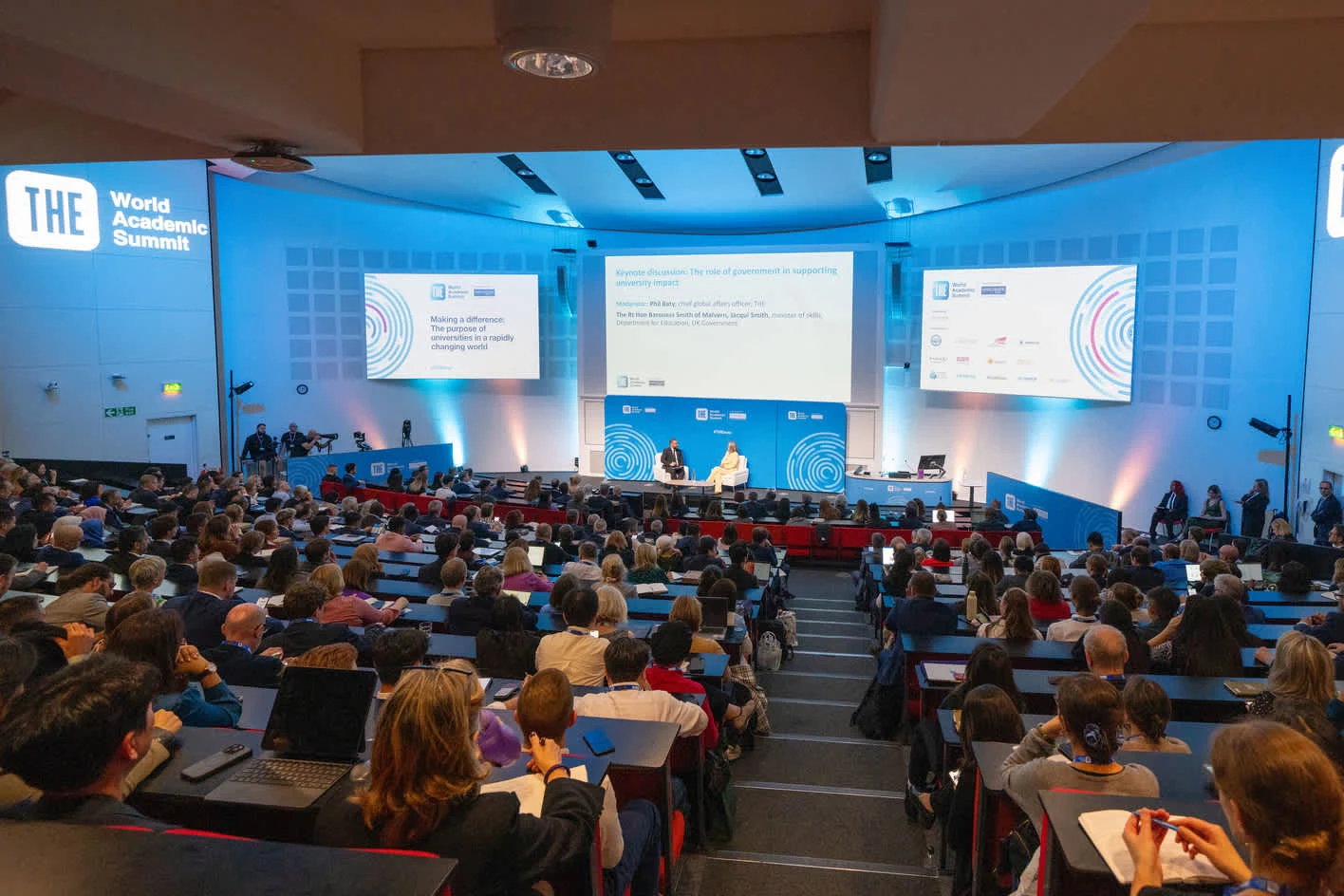
The Times Higher Education World Academic Summit made history this October 7–9, 2025, as it convened for the first time in the Middle East at King Abdullah University of Science and Technology (KAUST) in Thuwal, Saudi Arabia. This landmark event brought together over 800 leading university presidents, decision-makers, industry leaders, and academics from across the globe to explore the transformative theme: "Universities as agents of change."
In his opening remarks, KAUST President Sir Edward Byrne emphasized that hosting this prestigious summit for the first time in the Middle East affirms Saudi Arabia's growing leadership in science and innovation. The milestone underscores KAUST's role as a benchmark model for universities designed to deliver impact, providing an opportunity to collaborate with global partners to drive progress and shape the future of higher education. Phil Baty, Chief Global Affairs Officer at Times Higher Education, noted that the summit brought together some of the most influential voices in higher education to address the challenges and opportunities facing universities today. KAUST's hosting of the event reflects its mission-driven role in supporting Saudi Arabia's priorities in research, development, and innovation under Vision 2030.
By linking academic research with industry needs, universities propel technological advancement, job creation, and sustainable development worldwide. Sessions highlighted how institutions can better bridge the gap between research and real-world application.
Speakers presented research-based practical solutions addressing real-world urban challenges, from developing sustainable infrastructure to innovations in health and artificial intelligence. The role of universities in creating livable, future-ready cities was a central focus.
Discussions centered on how universities must evolve to tackle complex, interconnected problems including climate change, public health crises, and technological disruption. The emphasis was on collaborative, interdisciplinary approaches.
A key focus was on equipping students with the essential skills needed to build a sustainable future in a rapidly changing world, emphasizing adaptability, critical thinking, and global citizenship.
The summit highlighted how universities can integrate traditional knowledge with contemporary perspectives, contributing to both the preservation of cultural identities and the transformative processes shaping modern societies.
Universities' pivotal role in advancing the United Nations' Sustainable Development Goals (SDGs) through interdisciplinary collaboration, research, education, and community engagement was thoroughly examined.
A highlight of the summit was the exclusive reveal of the THE World University Rankings 2026. Key findings included:
Oxford’s decade of dominance: the University of Oxford retained the #1 position for a record-breaking tenth consecutive year, driven by its strong research environment.
Asian universities stagnate: For the first time in 14 years, Asia's elite universities showed no improvement—Tsinghua (12th), Peking (13th), and National University of Singapore (17th) all remained steady.
US continues decline: American institutions faced another challenging year, with Princeton being the only US university to achieve its best-ever finish (joint 3rd).
China’s growing presence: China now has five universities in the top 40, up from three last year.
Hong Kong’s record performance: Hong Kong achieved a record six institutions in the top 200, thanks to improvements in teaching reputation and student-to-staff ratios.
Expanding rankings: The 2026 edition includes 2,191 universities from 115 countries and territories.
The World Academic Summit 2025 reinforced a powerful message: universities must move beyond being centers of learning to become active agents of societal transformation. As institutions worldwide navigate financial pressures, political challenges, and rapidly evolving societal expectations, their ability to demonstrate tangible impact will be crucial to their relevance and success. The choice of Saudi Arabia as the first Middle Eastern host represents a significant recognition of the region's growing influence in global higher education and its commitment to becoming a knowledge economy powerhouse. The summit demonstrated that the future of higher education is increasingly global, collaborative, and mission-driven - with universities positioned as essential partners in solving humanity’s most pressing challenges.

President, Constructor Tech