Constructor Practice: Mechanics laboratories
Choose from 21 mechanics immersive virtual experiments and master the fundamental laws of motion that govern our physical world.



From exploring Newton's laws of motion to investigating complex oscillations and rotational dynamics, our 21 immersive mechanics experiments let students safely investigate everything from basic kinematics to advanced mechanical systems. Teachers gain unprecedented flexibility to demonstrate motion principles, force interactions, and energy transformations that would require expensive equipment and large laboratory spaces in traditional settings.
Curriculum-aligned with IB, AP, A-Level, and K–12 standards for comprehensive, hands-on classical physics learning
Observe projectile trajectories, analyze collision dynamics, explore pendulum oscillations, and investigate rotational motion. All with precise measurements and real-time data visualization that reveals the physics behind everyday motion
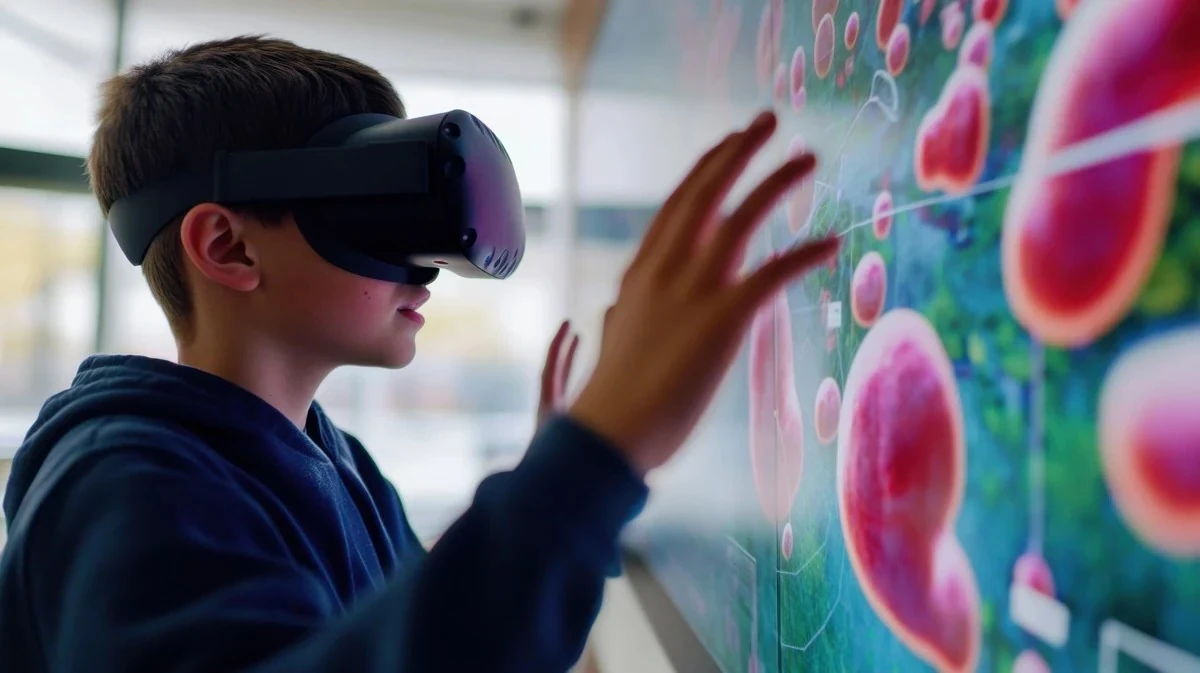
Conduct realistic mechanics experiments on any device—PCs, laptops, tablets, or VR headsets like Meta Quest 3. No need for large laboratory spaces, expensive motion sensors, or complex apparatus setups
Remove the barriers of traditional mechanics labs. Students can safely explore high-energy collisions, investigate frictionless environments, analyze perfect springs, and repeat motion experiments as many times as needed
Ready-made experiments designed for seamless integration into your existing curriculum, complete with progress tracking to monitor student understanding of kinematics, dynamics, and energy conservation principles
Assign virtual lab experiments, monitor student performance on motion analysis and force calculations, and streamline your mechanics teaching workflow with automated data collection and analysis
Transform abstract mechanics concepts into hands-on experiences. Students actively manipulate forces, observe motion patterns, and engage with adaptive simulations that adjust to their learning pace—dramatically improving knowledge retention
Built-in evaluations test student comprehension of motion principles, from basic kinematics to advanced rotational dynamics, tracking progress throughout their learning journey
Complex mechanics experiments can be performed repeatedly under ideal conditions, allowing students to understand Newton's laws, conservation principles, and motion dynamics without experimental errors or equipment limitations
Our platform enables investigation of angular momentum, harmonic oscillations, and energy transformations that form the foundation of engineering, astronomy, and all physical sciences, bringing theoretical physics into practical understanding

Embracing the motto "Teach Better, Learn Better", VRLab Academy transforms science education through cutting-edge interactive learning tools and a versatile digital learning environment, supercharging student engagement and enhancing traditional lab experiences.
Our software works with real time data, real formulas and actual results. Students can save and share received data. Our experiments do not only run with simulations and animations, but also give students the experience of an actual experiment process.
Yes! Practice experiments correlate with all major curriculum standards like IB, Cambridge International, Edexcel, etc. Our science department is always here to meet the needs of all educators and students.
Our team developed more than hundred experiments from ten different disciplines. We have Practice Junior, Biology, Chemistry, Electric, Mechanics, Modern Physics, Thermodynamic, Medical Biochemistry, Popular Science, Optics and Waves laboratories. Every month we add new experiments. If you can not find a required one in our portfolio, connect with Practice and our team will develop it.
Yes! Our integration works with any LMS. We try to make Practice usage as comfortable as possible. The integration saves time, reduces manual tasks, makes Single sign-on process possible and offers access to students performance datas.
Yes! Practice experiments available in English, Spanish, Turkish, German, Arabic and Russian languages. We try to deliver the most comfortable experience to our users and language should not be an obstacle.
All students starting from primary school to university can find suitable science experiments in Practice portfolio. Initially we created Practice for high school and university level students. However, recently we added Practice Junior for primary and middle school students. So, now everyone can experience science without any limit.