The hidden cost of slow computation: why research needs a smarter approach

20 February, 2025

Computational research is at the heart of modern scientific discovery but remains burdened by slow, costly, and fragmented environments. Researchers struggle with setting up complex workflows, ensuring reproducibility, and efficiently managing vast amounts of data. These challenges slow down innovation and create unnecessary barriers to progress. However, emerging AI-driven solutions transform how scientists approach these issues, paving the way for greater efficiency and scalability.

The limitations of traditional computational environments

"One of the biggest challenges in material research is its overwhelming complexity—trillions of atoms, disorder at the atomic scale, and an ever-expanding portfolio of advanced materials. With so many technology options, choosing the right one becomes a problem. Existing workflows lack the integration needed to connect, for example, structure modeling with the resulting properties, further slowing progress."


Bild
Prof. Dr. Stephan Roche, ICREA Research Professor at the Catalan Institute of Nanoscience and Nanotechnology

Prof. Dr. Stephan Roche

ICREA Research Professor at the Catalan Institute of Nanoscience and Nanotechnology
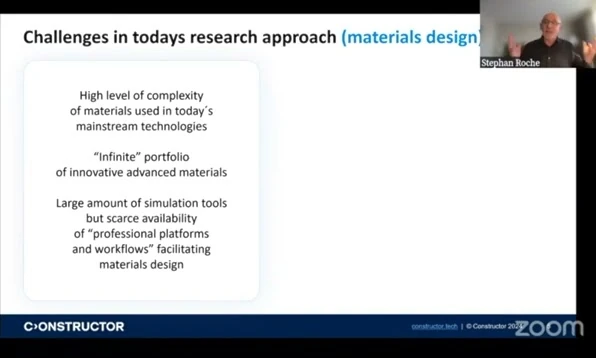
Challenges in today's research approach

Scientists working on complex simulations, such as quantum materials or molecular interactions, typically rely on Density Functional Theory (DFT). While accurate, DFT is notoriously computationally expensive. The issue is compounded by:

High computational costs due to the need for large-scale simulations.

Lengthy setup times for configuring high-performance computing (HPC) environments.

Fragmented research workflows, leading to errors and inefficiencies.

What does research say?

A study on multisensory instruction found that students who engaged in hands-on math activities improved significantly in subtraction tasks.

The International Dyslexia Association highlights that multisensory instruction strengthens memory and cognitive processing.

The Journal of Learning Disabilities reports that students with dyscalculia perform better with multisensory teaching than with traditional methods.

Optimizing workflows for better efficiency and reproducibility

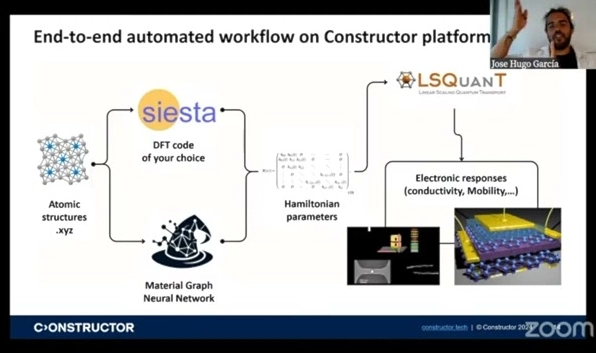
"Usually, setting up computational workflows requires a team of researchers to manually manage multiple steps—atomic structure extraction, electronic property computation, Hamiltonian derivation, and quantum transport simulation. This process is not only time-consuming but also prone to errors. With Constructor Research, all these steps are seamlessly integrated into a single platform, eliminating the need for multiple people to manage different aspects and allowing researchers to focus on innovation rather than troubleshooting software."


Jose H. Garcia

PhD, Expert in large-scale material optimization using HPC

Optimizing workflows for better efficiency and reproducibility

Key benefits of Constructor Research

Instant access to computing power

No need for manual software setup or hardware  

Centralized data storage

Ensures research remains reproducible and accessible.

Collaboration-friendly workflows

Teams can easily share and verify results without dealing with compatibility issues.

Real-world impact: Faster iterations, fewer errors

"I truly believe that to construct a good research project, it must be reproducible. It's the only way for people to trust it and build upon the developments we create."


Andrei Voicu Tomut

PhD student at ICN2

Developing Artificial Intelligence workflows on Constructor Research platform

Integrating AI-driven research with Constructor’s streamlined environment is already delivering real impact. Research teams have reported:

80% reduction in computational overhead for Hamiltonian extraction.

Faster experimental iterations, enabling more discoveries in less time.

Seamless collaboration between academic and industry partners.

Conclusion:

As research continues to highlight the benefits of multisensory learning, more educators and parents are turning to innovative tools like Calcularis. By combining proven teaching strategies with adaptive digital solutions, we can empower students with dyscalculia to succeed in math and beyond. Want to transform math learning? Discover how Calcularis can help today!