Proving mastery in the age of AI: questions higher-ed leaders are asking
Answers and takeaways from our webinar with Instructure on designing assessment for what comes next


When AI can produce a strong answer in seconds, the old question, "How do we stop AI?", stops being useful. The better question is how to design assessment so that mastery still means something when AI is everywhere.
That was the focus of Proving mastery in the age of AI: designing assessment for what comes next, our October 2026 webinar with Instructure. Amanda Cadran, Ph.D. (Instructure) moderated a conversation with psychometrician Denis Federiakin, Ph.D., and Constructor product managers Rasilia Rakhmatulina and Tania Kolosova. Attendees sent more questions than we could answer live, so below are the answers to the ones that came up most.
A psychometric view on test validity when AI can generate a strong answer, and why the evidence might be there without the ability to produce it.
When students should demonstrate skills on their own, and when using AI well is the skill being assessed.
A trusted independent assessment followed from setup in Canvas through the student experience, captured evidence and human review.
Scores that explain themselves and factor in your integrity policy, coming to Canvas in Q1 2027.
Concise follow-up answers to the key questions and themes raised during the discussion.
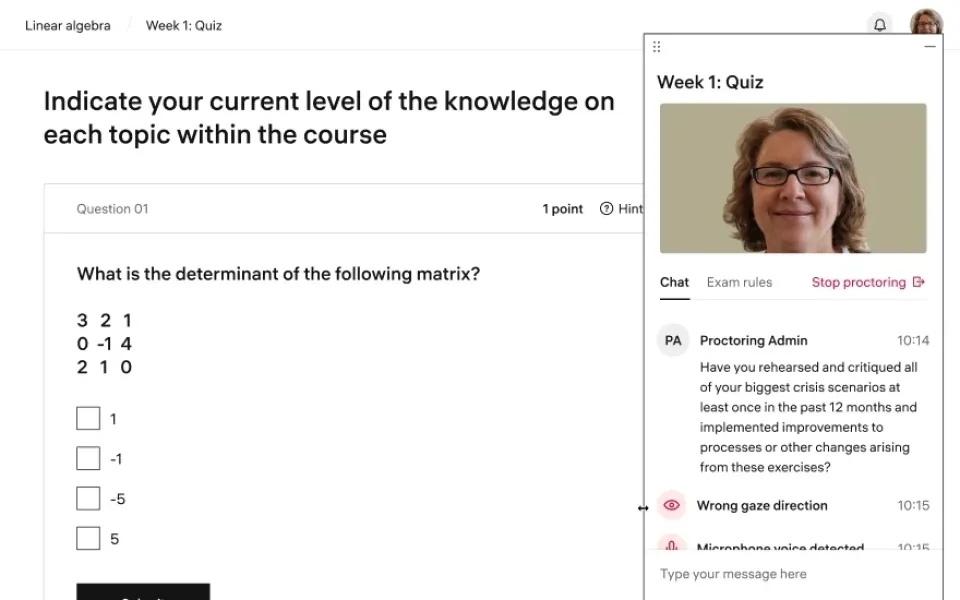
Proctoring that is selective by design: used where independent demonstration actually matters, kept inside the institution's Canvas workflow, and producing evidence for a person to review. Technology surfaces potential concerns; people make the consequential decisions.
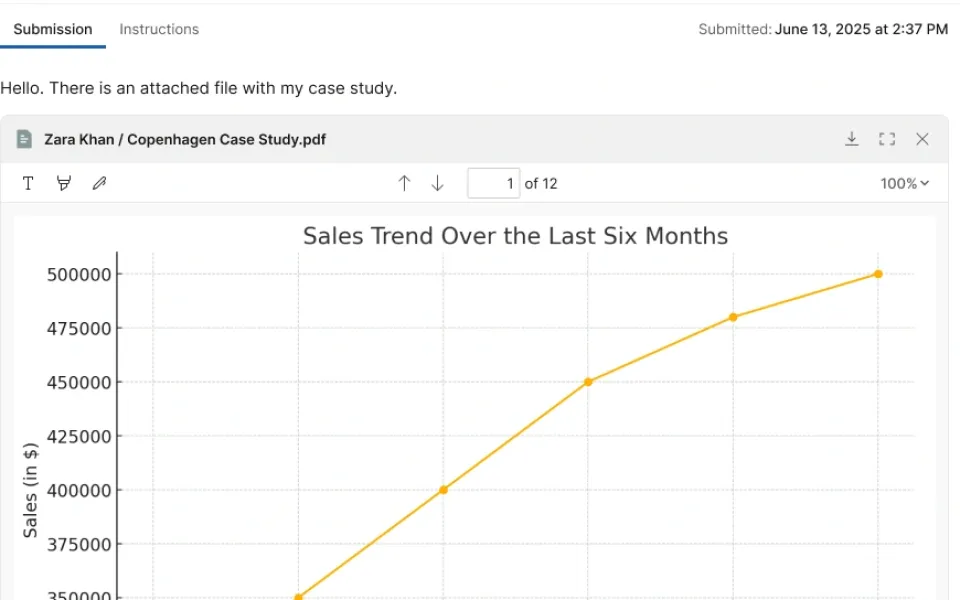
Assess grades text, PDFs, sheets, slides, images, audio, video and code against your rubric, instructions and integrity rules, and explains every score and deduction. In the demo, a 50% plagiarism score was revised to 35% because a required bibliography had been flagged, with the reasoning shown to the instructor. Assess AI grading comes to Canvas in Q1 2027.
Sr. Researcher and Academic Strategist, Instructure. Moderator.
Researcher, Educational Psychology and Psychometrics. Featured academic speaker.
Product Manager, Constructor Proctor. Proctor demo.
Product Manager, Constructor Assess. Assess preview.
Independent performance, effective AI use, or both. Your answer shapes every step that follows.
Prohibited, disclosed, allowed or expected, with what students can do and what they must provide.
Pick two or three pieces across product, process and AI use, such as an oral defense or version history.
Define what counts as a violation, what warrants review, who decides and how appeals work.
Bring your answers together for one course and task on a single page.
Complete a ready-made template, with a worked example of what students see.