Trends in computational research: what’s coming in 2025?
24 January, 2025


The landscape of computational research continues to evolve at a rapid pace.
Emerging methods, the drive for sustainable solutions, and improved access to powerful hardware set the stage for new breakthroughs.
Below, we explore the top trends poised to shape computational research by 2025, referencing forecasts from industry analysts and insights from Constructor Research to highlight what innovators and academics should anticipate.
According to IDC forecast, the global high-performance computing (HPC) market is expected to expand at a compound annual growth rate of 7.4%, reaching nearly USD 45 billion by 2025.
This growth is fueled by the development of specialized processing architectures that go beyond conventional central processing units (CPUs).
Graphic processors (GPUs), field-programmable gate arrays (FPGAs), and emerging accelerator designs promise greater computational throughput for large-scale data analysis, simulation, and modeling.
As these specialized processors drop in cost, more research teams—academia and industry—will be able to handle tasks previously exclusive to large, well-funded institutions.
The availability of these new processing capabilities is driving everything from protein folding simulations in life sciences to high-resolution modeling in climate research.

In the modern research environment, data volumes grow exponentially every year.
Gartner predicts that data analytics technologies will surge nearly 25% in worldwide spending by 2025, primarily driven by organizations seeking real-time insights.
Rather than relying solely on traditional computational methods, researchers are turning to robust statistical approaches and algorithmic automation to draw rapid conclusions.
This shift emphasizes:
Systems that can systematically ingest, label, and maintain massive data sets.
Integrating domain experts with computational specialists ensures that research hypotheses are shaped by both conceptual knowledge and quantitative rigor.
Automated modeling toolkits (distinct from standard “machine” methods) that can forecast trends in everything from industrial manufacturing to ecological conservation.
Infrastructure-as-a-Service (IaaS) solutions have become standard for many research teams needing flexible computing power.
According to IDC, by 2025, cloud-based HPC services are expected to represent a significant share of HPC spending, offering virtually unlimited compute capacity on demand.
This trend shifts institutions from building massive on-premises clusters to saving on maintenance, cooling, and hardware upgrades.
Researchers can scale compute resources up or down based on project demands.
Pay-as-you-go models help manage budgets more effectively, especially for smaller labs or organizations with fluctuating computational needs.
Global teams can quickly share datasets and processing environments via cloud platforms, spurring cross-border collaboration.
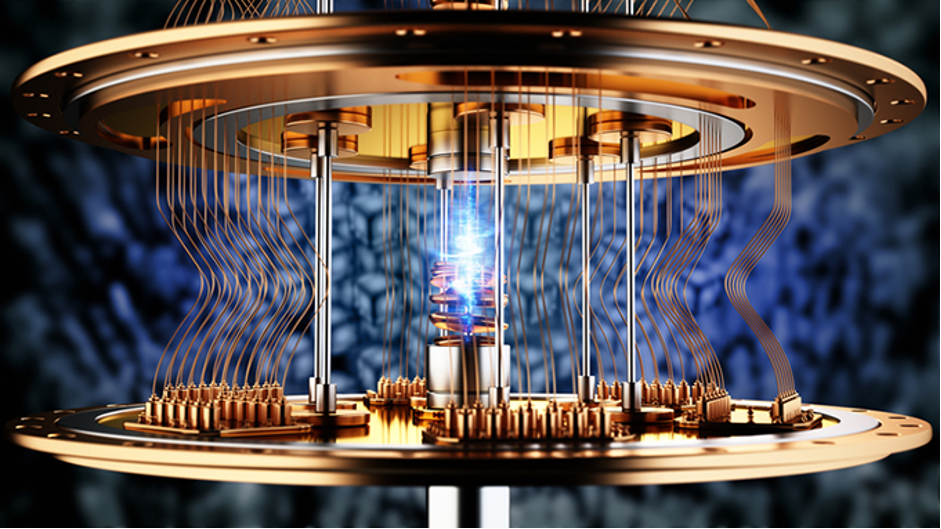
Even though fully scalable quantum hardware might still be a few more years away, hybrid classical-quantum approaches are emerging as credible solutions for particular class problems—such as advanced cryptography, complex optimization tasks, and certain chemical simulations.
Industry watchers, like those contributing to the Constructor Tech blog, indicate that quantum-ready algorithms—methods designed to run partly on quantum devices and partly on classical HPC clusters—will gain traction in 2025.
These algorithms aim to bridge the gap between current hardware capabilities and the promise of next-generation problem-solving speed.
Historically, the race for performance has come at the cost of high energy consumption. However, sustainability is no longer optional.
According to a recent Gartner analysis, green computing strategies will be a key differentiator for research institutions by 2025, affecting everything from grant funding to regulatory approvals.
Key developments include:
Specialized chips designed to deliver high performance per watt.
Intelligent workload distribution that minimizes idle server time and balances cluster loads to reduce power draw.
Data centers are increasingly powered by renewable energy, lowering the overall carbon footprint of big research projects.
Instead of relying on generic solutions, research teams are turning to domain-centric platforms tailored to specific scientific needs.
Whether it’s computational biology, materials science, or fluid dynamics, specialized toolsets and pre-configured environments are drastically reducing the time researchers spend on setup and integration.
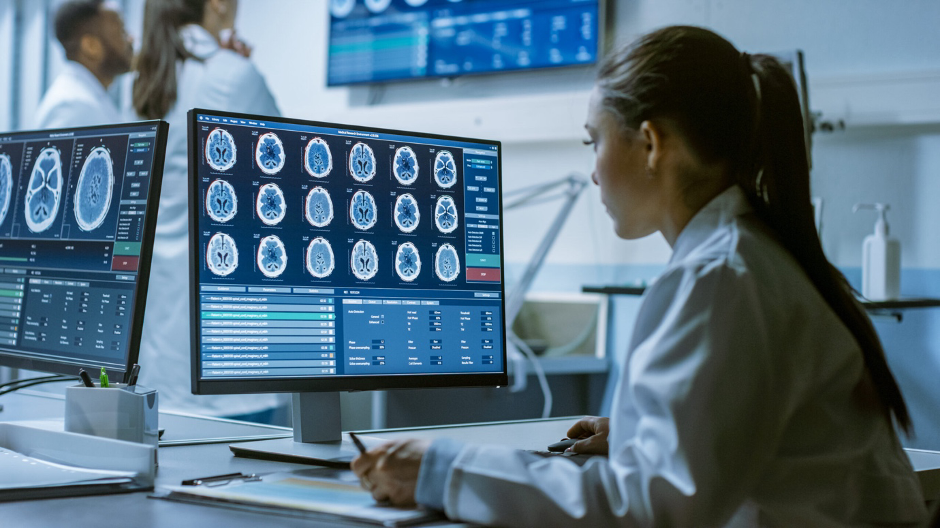
As computational research progresses, staying ahead depends on knowing which technologies are arriving - and how to use them.
Each development points to more inclusive and efficient research practices, advanced data-driven approaches, cloud-based infrastructure, or sustainability-focused design.
Constructor Research is at the forefront of these shifts, offering a robust platform to address many of the abovementioned challenges.
If you want to simplify workflows, scale efficiently, and drive impactful results, try the Constructor Research platform for free. You’ll gain access to advanced computational tools and domain-specific features that help you tackle the most demanding research problems without the hassle of managing complex infrastructure yourself.
Make 2025 the year you elevate your computational research to new heights.