Grafari Module 6: a learning safari through the world of words
10 November, 2026


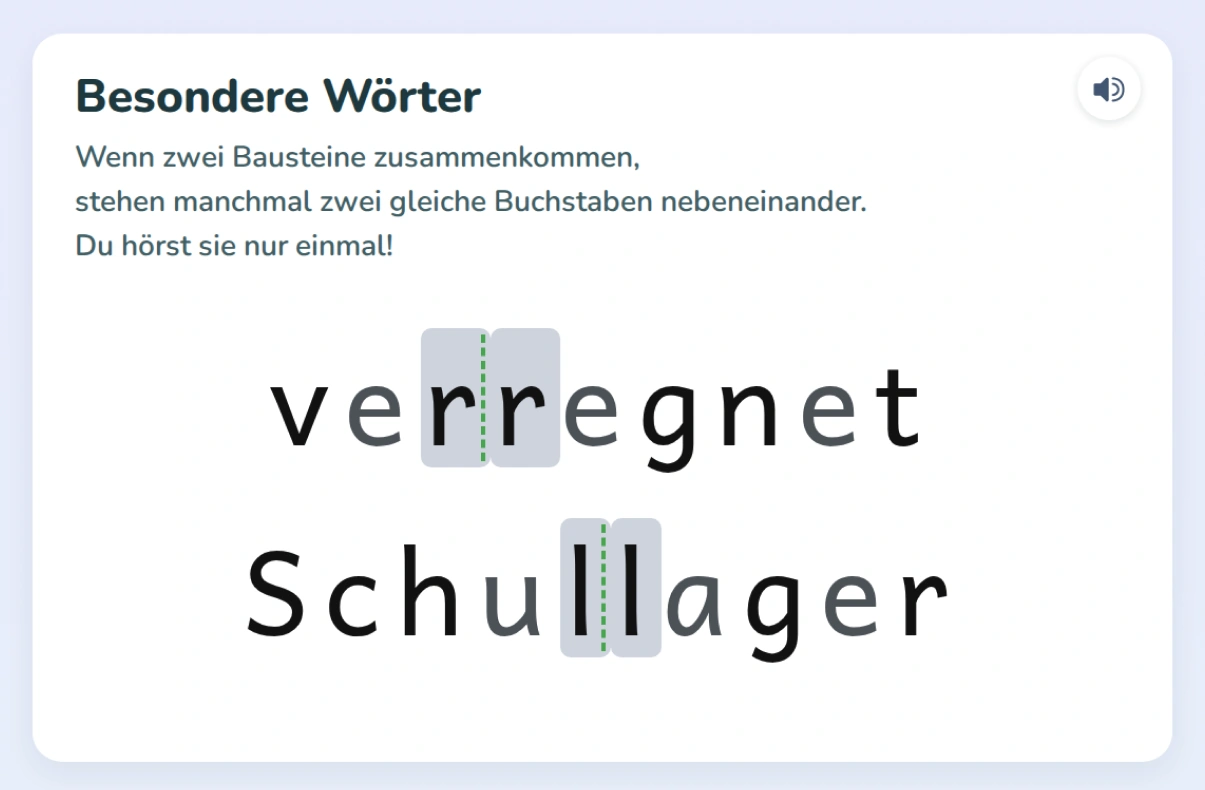
Ask a fourth-grader to write «verregnet». They hear one r. The word has two. Same with the double t in «Brotteig» or the ie in «Tier». A child who spells by ear will get these wrong, and no amount of listening more carefully fixes it.
The fix is in how the word is built. That is what Grafari Module 6 teaches.
Grafari's earlier modules build the foundation: phonetic spelling first, then capitalised nouns. Module 6 is the next step, and the point where analytical work begins.
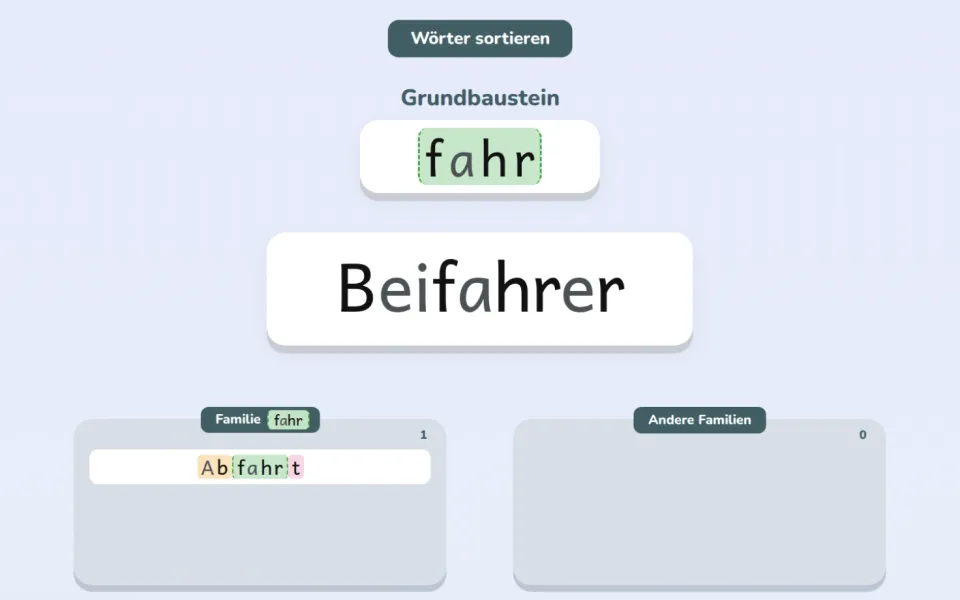
Children learn to split words into prefixes, roots and suffixes. Then they discover the rule that makes a lot of German spelling click: the root is always spelled the same way. «lieb», «lieben», «Liebling», «verliebt», «Liebesbrief» all share one root. Get the root right once, and the whole word family follows.
The double r in «verregnet» stops being a trap, too. It's simply where «ver» meets «regnet».
Module 6 is designed for grade 4. The earliest recommended start is the second semester of grade 3.
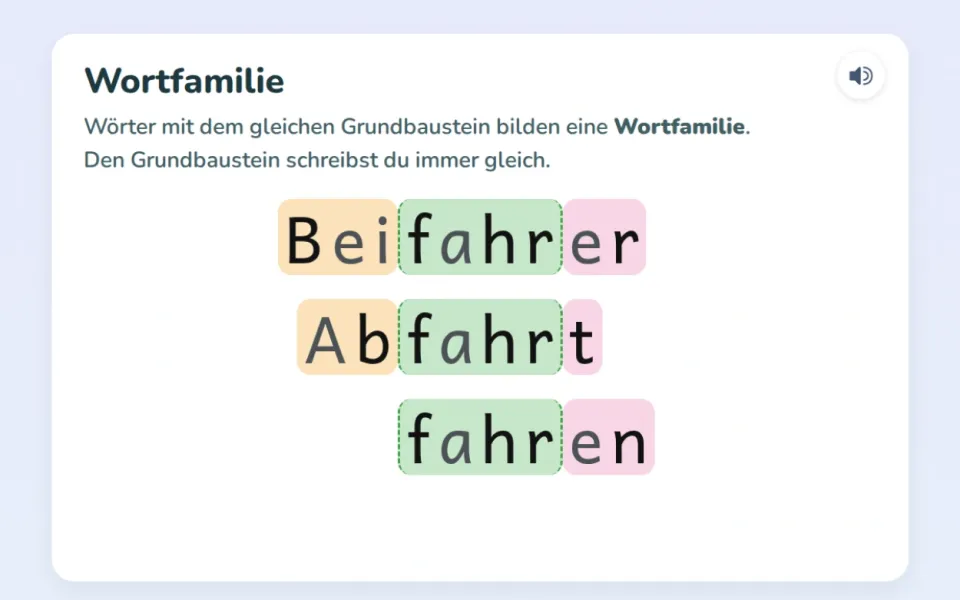
The learning path is built in ten steps that build on each other. New learning words are practised systematically and repeated together with those from Modules 3 to 5, so nothing learned earlier fades. Select a stage to see its steps.
The screens shown reflect the current development stage.
Children get to know root morphemes and see how one root holds a whole word family together.
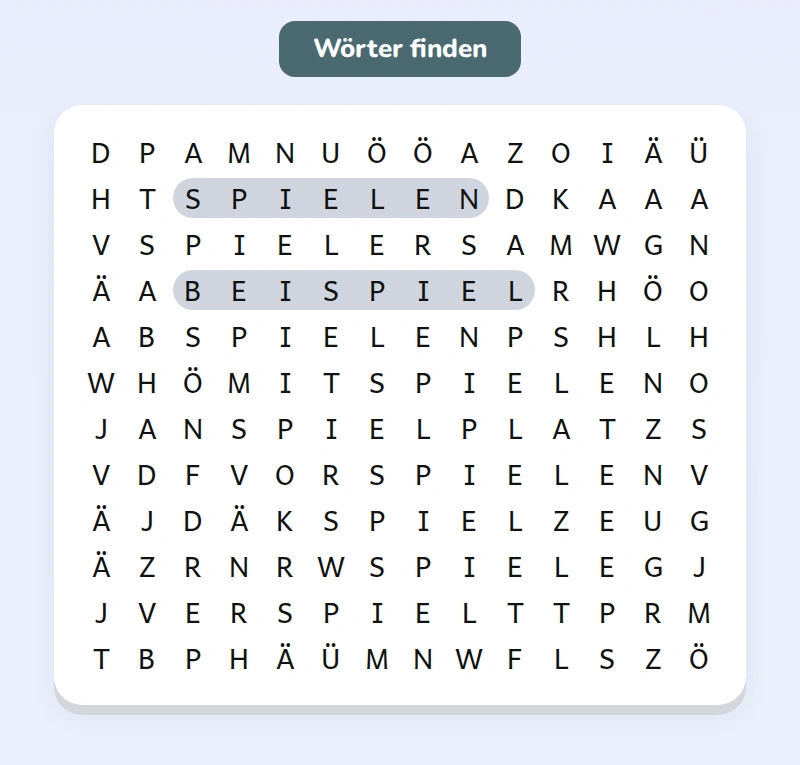
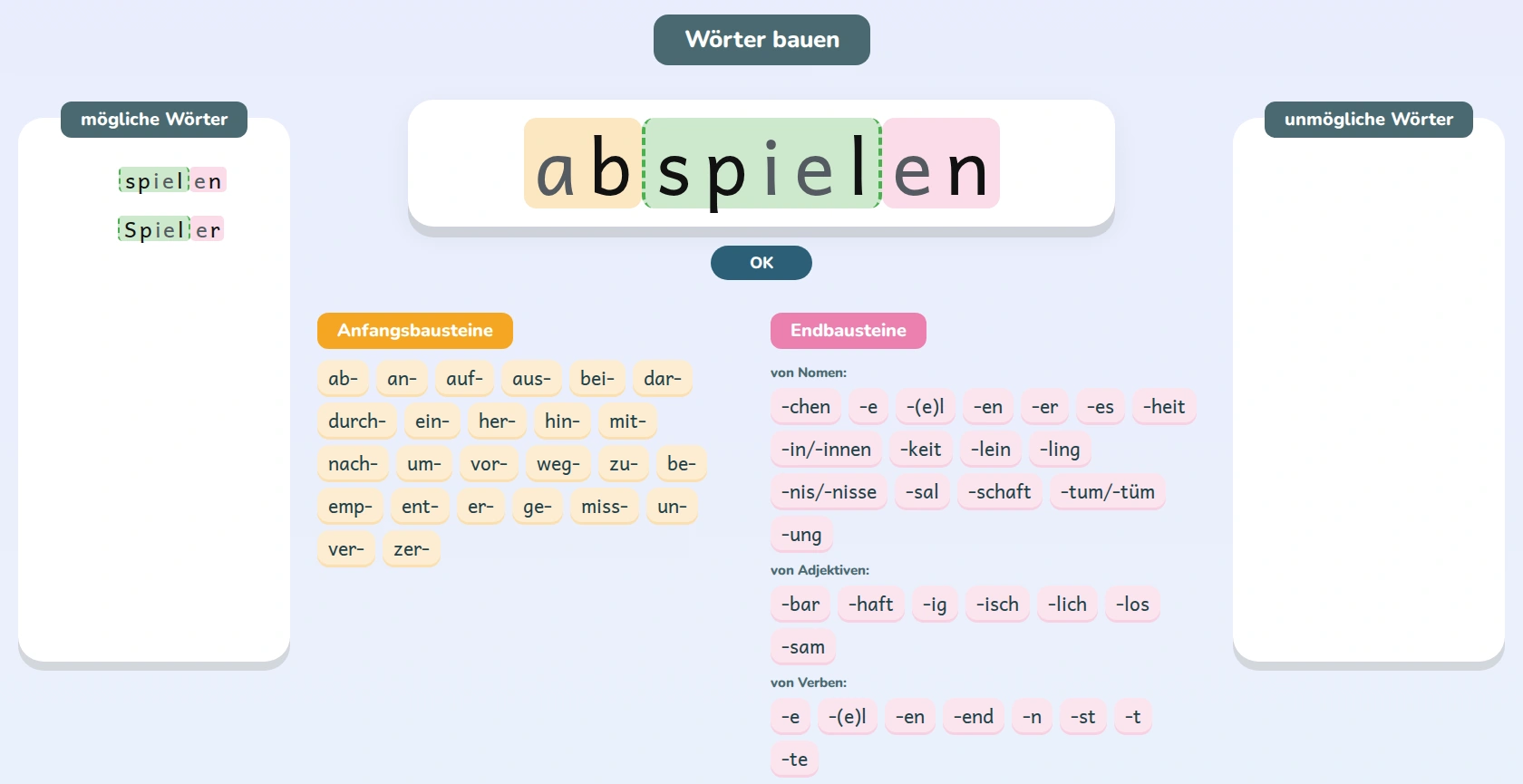
Children split words into their building blocks and put them back together.
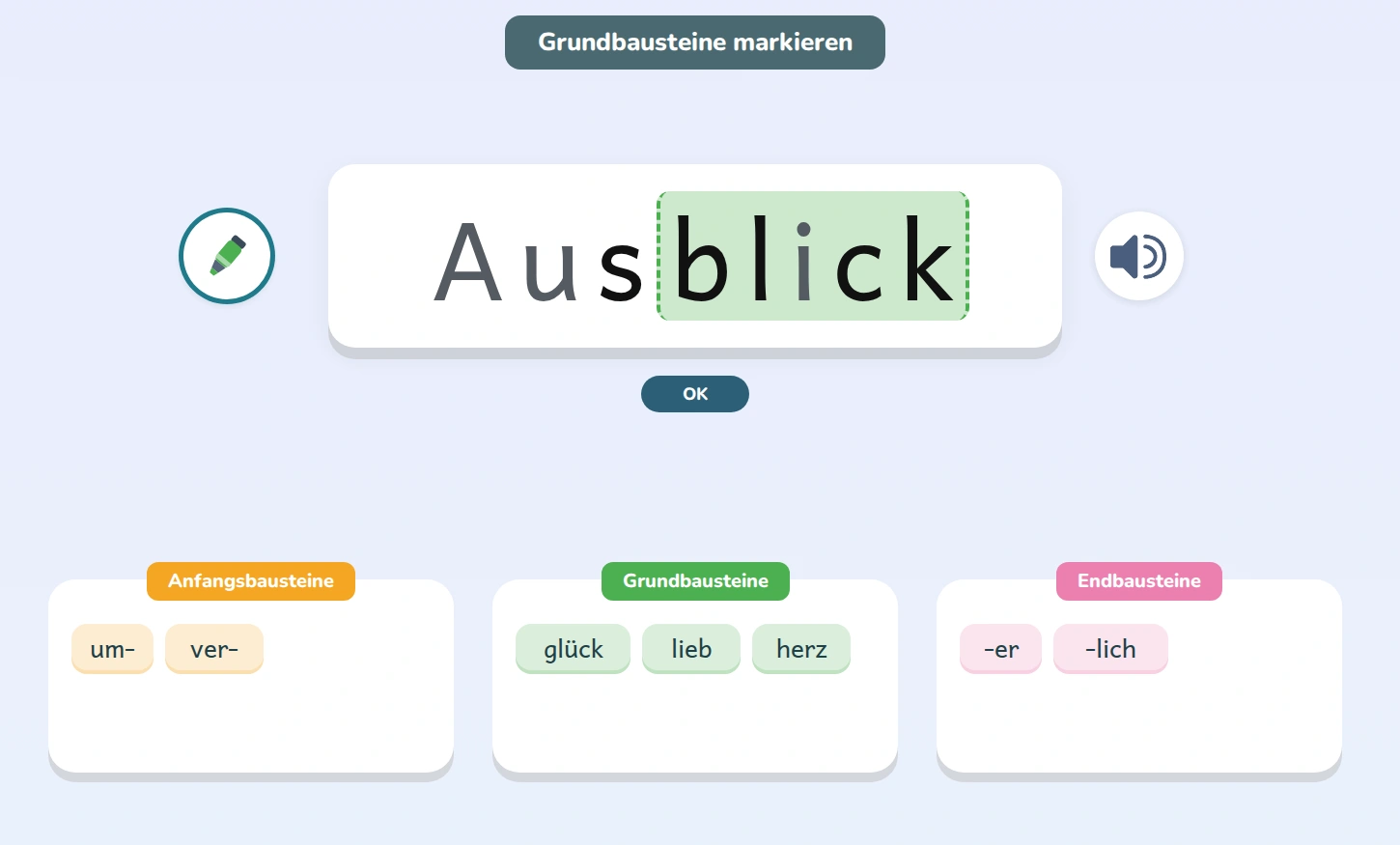
Children work with prefixes, suffixes and linking elements, also in long and compound words.
Children apply the spelling rules and secure them through dictations and revision.
While children work at their own pace, Grafari steers each child's learning. It spots where a child struggles and leads them to the right exercises automatically. If a child is missing groundwork from earlier modules, Grafari fills the gap without the teacher having to set anything up.
Two tools give teachers room to teach their way:
Multisensory activities and hybrid tasks that build handwriting round out the training.
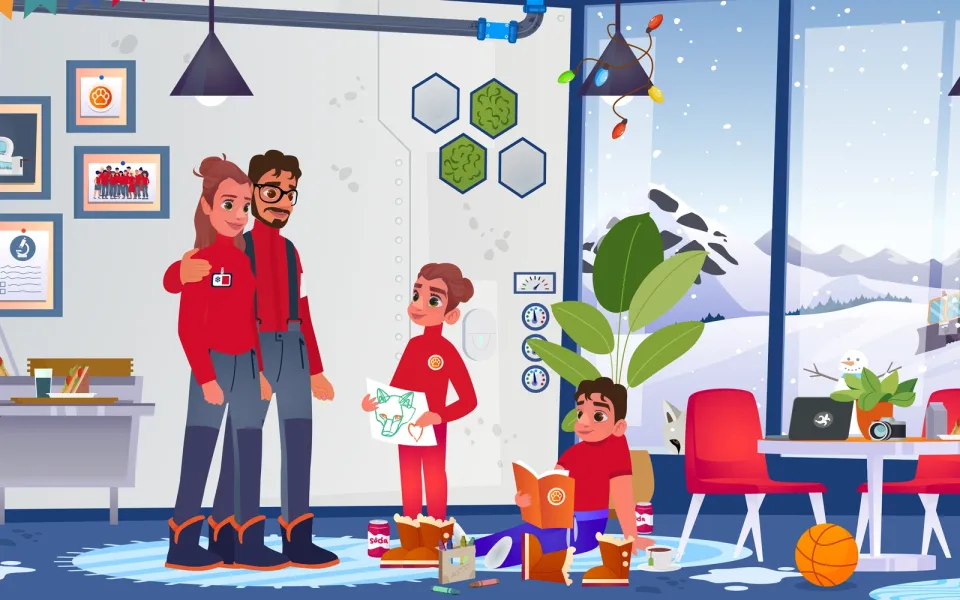
After the jungle, underwater and coast worlds, the Grafari drone takes off again, this time for the Arctic. At a research station, children become explorers. They meet wild animals, brave snowstorms and see how climate change is reshaping the polar world.
The adventures tie NMG topics (nature, people, society) to creative writing. What children experience becomes their own stories in the Writing Lab, where they put their spelling straight into practice. The reward system was developed with children's author Carlo Meier.
Module 6 covers the Lehrplan 21 competences 5.D.5.1.b and 5.D.5.1.c: using the term word stem, forming word families, splitting compound nouns into their stems, and splitting words into morphemes using the terms root, prefix and suffix morpheme.
Module 6 is included in the Grafari Literacy offer at no extra cost. Schools already using Grafari get it with their existing licence when it launches with the new school year in August 2027.
Between March and June 2027, you can test Module 6 with your class before it launches for everyone in August. Sign up and we'll send you the details of the testing phase. We'll find a licence arrangement that fits your class size and timeframe, and your feedback goes straight into development.