Latest article
Reading interventions for dyslexia: evidence-based K-5 guide
How schools select evidence-based structured literacy programs. A procurement guide for SPED directors, learning support coordinators, and RTI/MTSS leads.


How schools select evidence-based structured literacy programs. A procurement guide for SPED directors, learning support coordinators, and RTI/MTSS leads.

Author of the renowned course Fundamentals of Spelling and co-developer of the AI-powered learning program Grafari, Dr. Katharina Leemann has worked for decades with children, adolescents, and adults facing significant spelling challenges. Her course Fundamentals of Spelling — introduced 25 years ago — was a milestone in literacy education and is still widely used today. She has taught across German-speaking Switzerland and lectured at the Zurich University of Special Education. Although now retired, she continues to be active as an expert and author, contributing her expertise to the development of Grafari.
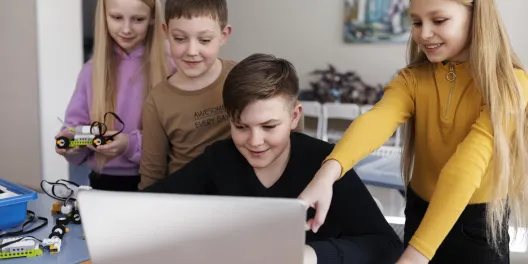
As educators increasingly prioritize student wellbeing alongside academic achievement, Constructor Tech's innovations position schools to create learning environments that foster emotional resilience and holistic development in a world transformed by AI and scientific advancement.
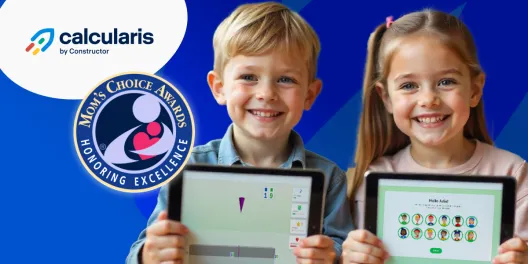
At Constructor Technology, we believe every child can learn math—they just need the right support. That’s why we’re proud to announce that Calcularis, our personalized math learning app, has received the Mom’s Choice Award® a trusted U.S.-based seal of excellence in family-friendly education.
Mathematics can feel like an unsolvable puzzle for students. Research estimates that 3–6% of the population struggles with dyscalculia, making math anxiety a common challenge. Since traditional teaching methods rely on memorization, students with dyscalculia need alternative strategies—this is where multisensory learning comes in.
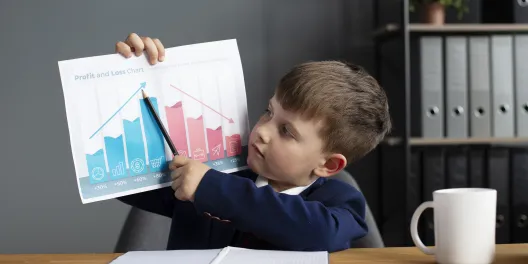
Math often feels overwhelming for young learners, especially when concepts remain abstract. Visualization tools, such as number lines, graphs, and manipulatives, serve as bridges between theoretical mathematical ideas and practical understanding. A teaching children mathematics study reported that students using number lines improved subtraction accuracy by 25%. Similarly, graphs make math relatable by illustrating trends and relationships.